The short answer
When someone clicks a link in ChatGPT and buys, the order can carry the source with it: chatgpt.com. You can open the order and see it.
The visit reports are less reliable. In our shop, most ChatGPT visits were filed under “direct”, as if the customer had typed the address themselves.
So if you only look at your referrer report, you will undercount AI.
The shop we looked at
The Medispa Edit is a UK skincare shop on Shopify, co-owned by one of our founders. We looked at everything from its first order on 10 July 2026 to 5 October 2026: 34 orders and 1,845 visits. Read the case study
What an AI order looks like
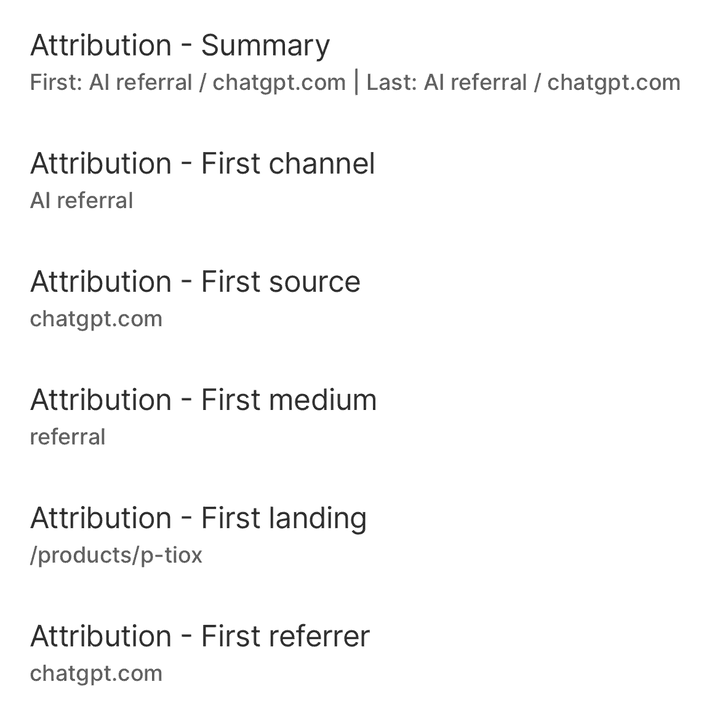
This is a real order. The first thing the customer did was arrive from ChatGPT, on a product page. The source is saved as chatgpt.com and the channel is labelled “AI referral”.
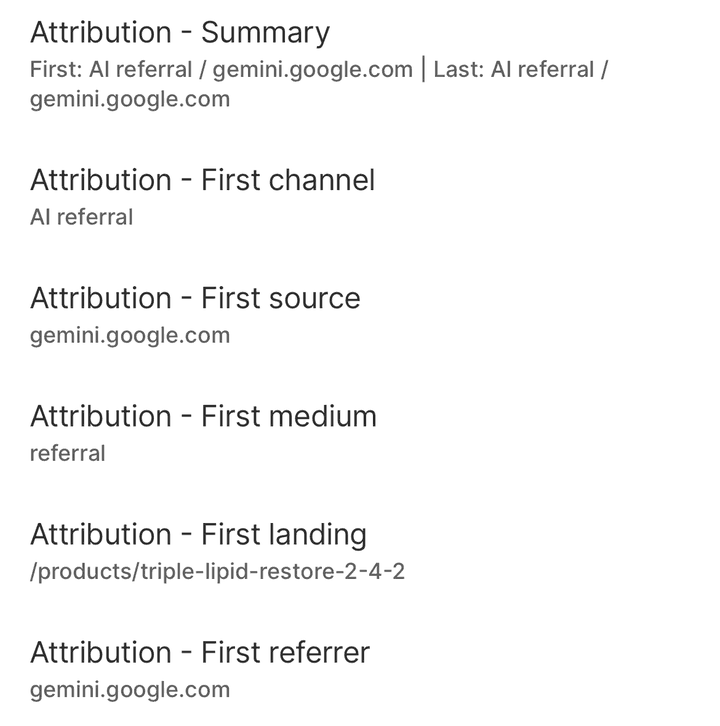
Gemini shows up in the same way, with gemini.google.com as the source.
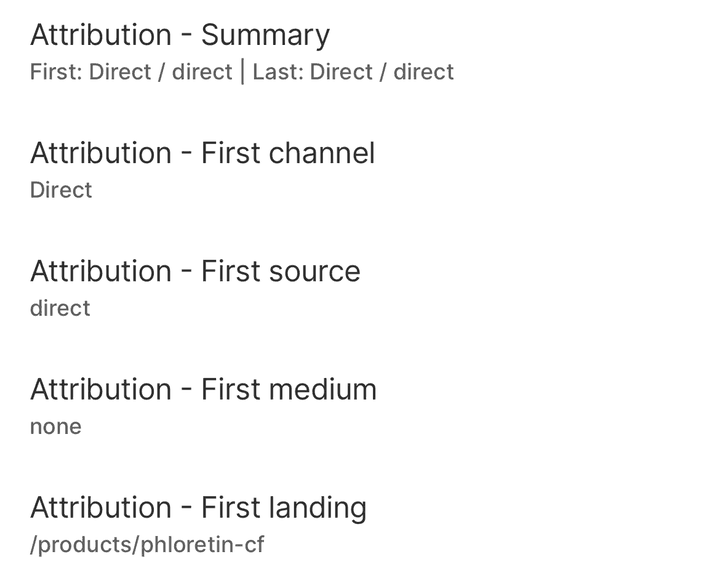
For comparison, this is an order with no source. It is filed as “Direct”. That can mean the customer typed the address. It can also mean the source was lost on the way.
Where the source gets lost
ChatGPT adds a small tag to the links it shows, naming itself as the source. That tag is what makes these visits traceable.
We found 70 visits carrying that tag. Here is how Shopify’s referrer report filed them:
Filed as direct
The tag was there, but no referring site was passed on.
Filed as ChatGPT
Both the tag and the referring site were present.
Filed as Facebook
The tag said ChatGPT. The referring site said Facebook.
In other words, the referrer report showed about one in seven of the ChatGPT visits we could identify.
Two more gaps:
- Gemini visits can’t be counted separately in the visit reports. We only know about Gemini from the order itself.
- 13 of the 34 orders had no recorded journey at all. Some of those may have come from AI. We can’t tell.
One thing that confuses people
Every online order in Shopify has a sales channel, usually “Online Store”. That tells you where the sale happened. It does not tell you where the customer came from. For that, you need the source on the order.
How to check your own shop
- Open a recent order and find the conversion summary. Look at the first and last source.
- Open Analytics and look at sessions by referrer and sales by referrer. Search for chatgpt.com, gemini.google.com and perplexity.ai.
- Then look for the tag as well. Check visits where the campaign source is chatgpt.com. Count those, not only the referrer.
If the two numbers are far apart, as ours were, the bigger one is closer to the truth.
What this does not tell you
This is one shop and 34 orders. Your numbers will differ.
It also only covers people who clicked a link. If someone reads about your shop in an AI answer and searches for you later, nothing records that. Whatever you can trace is a minimum.
Figures are from the shop’s own Shopify reports, 10 July to 5 October 2026. Screens are as they appeared in October 2026 and may change.